- BPM
- 74
- Key
- B♭ Major
- Camelot
- 6B
Gounod: Faust, CG 4, Act 5 Scene 2: Ballet Music, 4. Variations de Cléopâtre (Moderato maestoso) by Charles Gounod, Michel Plasson, Orchestre Du Capitole De Toulouse, Orchestre National Du Capitole De Toulouse Song Details
Charles Gounod, Michel Plasson, Orchestre Du Capitole De Toulouse, Orchestre National Du Capitole De Toulouse's ' "Gounod: Faust, CG 4, Act 5 Scene 2: Ballet Music, 4. Variations de Cléopâtre (Moderato maestoso)" was released on its scheduled release date, 1991. With This song being less than two minutes long, at 1:32, we are fairly confident that this song is not explicit and is safe for all ages. Based on the duration of this song, this song duration is much smaller than the average song duration. The track order of this song in Charles Gounod, Michel Plasson, Orchestre National Du Capitole De Toulouse's "Gounod: Faust" album is number 18 out of 64. On top of that, France appears to be the country where this track was created. Gounod: Faust, CG 4, Act 5 Scene 2: Ballet Music, 4. Variations de Cléopâtre (Moderato maestoso) is not that popular right now. Since there is more of a neutral sound being played, this makes the track somewhat danceable.
BPM and Tempo
We consider the tempo marking of Gounod: Faust, CG 4, Act 5 Scene 2: Ballet Music, 4. Variations de Cléopâtre (Moderato maestoso) by Charles Gounod, Michel Plasson, Orchestre Du Capitole De Toulouse, Orchestre National Du Capitole De Toulouse to be Adagio (slowly with great expression) because the track has a tempo of 74 BPM, a half-time of 37BPM, and a double-time of 148 BPM. Based on that, the speed of the song's tempo is slow. The time signature for this track is 4/4.
Music Key
B♭ Major is the music key of this track. This also means that this song has a camelot key of 6B. So, the perfect camelot match for 6B would be either 6B or 7A. While, 7B can give you a low energy boost. For moderate energy boost, you would use 3B and a high energy boost can either be 8B or 1B. Though, if you want a low energy drop, you should looking for songs with either a camelot key of 6A or 5B will give you a low energy drop, 9B would be a moderate one, and 4B or 11B would be a high energy drop. Lastly, 3A allows you to change the mood.
Want to find the BPM and music key for other songs? Check out our BPM and Key Finder page!
- Popularity
- 1%
- Loudness
- -23.081 dB
- Acousticness
- 97%
- Danceability
- 43%
- Energy
- 3%
- Instrumentalness
- 81%
- Liveness
- 13%
- Loudness
- 62%
- Speechiness
- 3%
- Valence
- 41%
Recommendations
| Track | Artist | Key | Energy | Camelot | BPM | ||
|---|---|---|---|---|---|---|---|
 | Bizet: Carmen, WD 31, Act 3: Entr'acte | Georges Bizet, Michel Plasson, Orchestre National Du Capitole De Toulouse | D Minor | 1 | 7A | 113 BPM | |
 | Etudes: II. Ronds de jambe | Knudåge Riisager, Gennady Rozhdestvensky, Danish National Symphony Orchestra | G Major | 1 | 9B | 182 BPM | |
 | Bauern-Polka | Johann Strauss Orchester | G Major | 3 | 9B | 99 BPM | |
 | Khachaturian: Suite No. 1 from Spartacus: III. Variation of Aegina - Bacchanalia | Aram Khachaturian, Alexander Lazarev, The Bolshoi Symphony Orchestra | E♭ Minor | 2 | 2A | 129 BPM | |
 | Giselle / Act 1: Pas de deux des jeunes paysans (Valse) | Adolphe Adam, Friedrich Burgmüller, Monte-Carlo Philharmonic Orchestra, Richard Bonynge | B Major | 0 | 1B | 127 BPM | |
 | Marche funèbre d'une marionnette | Charles Gounod, Eugene Ormandy, Philadelphia Orchestra | D Major | 0 | 10B | 135 BPM | |
 | Rosen aus dem Süden, Op. 388: Rosen aus dem Suden, Op. 388 | Johann Strauss II, Hungarian State Orchestra, Janos Ferencsik | F Major | 1 | 7B | 190 BPM | |
 | I Will Be There | Mako | F Major | 2 | 7B | 61 BPM | |
 | Coppélia / Tableau 3: No. 20 Fête de la cloche: 7b) Danse de fête | Léo Delibes, Orchestre de la Suisse Romande, Richard Bonynge | C Major | 1 | 8B | 133 BPM | |
 | Ohne Bremse, Polka schnell, Op. 238 | Eduard Strauss, Willi Boskovsky, Wiener Johann Strauss Orchester | D Major | 3 | 10B | 82 BPM | |
 | Snow White: VIII. Games and Fun | Alexander Litvinovsky, Metamorphose String Orchestra, Pavel Lyubomudrov, Nikolay Donskoy | G Major | 2 | 9B | 78 BPM | |
 | Raymonda, Act II: Grand pas Espagnol | Alexander Glazunov, Kivov Orchestra, Viktor Fedotov | E♭ Major | 3 | 5B | 95 BPM | |
 | バレエ組曲「眠りの森の美女」 序奏 | ベルリン フィルハーモニー管弦楽団, ニューフィルハーモニア管弦楽団 | B Minor | 3 | 10A | 64 BPM | |
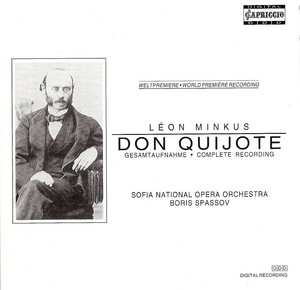 | Don Quixote, Act IV: Classical Variation I | Valery Zhelobinsky, Ludwig Minkus, Sofia National Opera Orchestra, Boris Spassov | D Major | 2 | 10B | 176 BPM | |
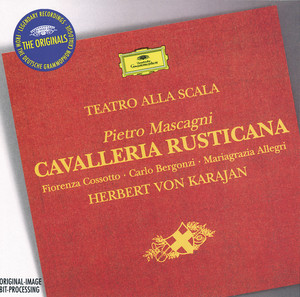 | Cavalleria rusticana: Scena. Largo | Pietro Mascagni, Fiorenza Cossotto, Maria Gracia Allegri, Orchestra Del Teatro Alla Scala, Milano, Herbert von Karajan | C Major | 1 | 8B | 75 BPM | |
| Raymonda, Act I: Scene 1. 1er Tableau (Lento maestoso) | Alexander Glazunov, Kivov Orchestra, Viktor Fedotov | E♭ Major | 1 | 5B | 81 BPM | |
 | Fata morgana, Op. 330: Polka Mazurka | Johann Strauss II, Rundfunkorchester des Südwestfunk, Klaus Arp | F Major | 1 | 7B | 112 BPM | |
 | Symphony No. 5 in D Minor, Op. 47: II. Allegretto | Dmitri Shostakovich, Frankfurt Radio Symphony Orchestra, Alain Altinoglu | B♭ Major | 2 | 6B | 125 BPM | |
 | I vespri siciliani / The Four Seasons: I. Winter (Transcr. Luigi Pecchia for Strings and Piano) | Giuseppe Verdi, I Musici, Francesco Buccarella | G Major | 1 | 9B | 144 BPM | |
 | Vals del Tesoro | George Henkla | C Major | 2 | 8B | 92 BPM | |
 | Eugen Onegin: Polonaise | Rundfunkorchester Berlin, Heinz Fricke | G Major | 5 | 9B | 95 BPM | |
 | Bahn frei, Op. 45 | Eduard Strauss, Willi Boskovsky, Wiener Johann Strauss Orchester | F Major | 6 | 7B | 157 BPM | |
 | Polonaise"Eugene Oneguine" | Tomomi Nishimoto, Russian Bolshoi Symphony Orchestra "Millenium" | G Major | 2 | 9B | 102 BPM | |
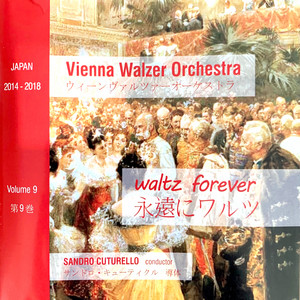 | Donausagen, op. 446 | Carl Michael Ziehrer, Vienna Walzer Orchestra, Sandro Cuturello | G Major | 2 | 9B | 96 BPM | |
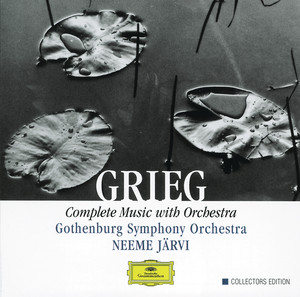 | Old Norwegian Romance, Op. 51: Tempo di Valse | Edvard Grieg, Gothenburg Symphony Orchestra, Neeme Järvi | F Major | 0 | 7B | 75 BPM |
- ISRC
- FRZ119100740
- Label
- L-M Records/RCA Records