- BPM
- 81
- Key
- C Minor
- Camelot
- 5A
Symphony No. 6 in E Minor: I. Allegro by Ralph Vaughan Williams, Hallé, Sir Mark Elder Song Details
"Symphony No. 6 in E Minor: I. Allegro" by Ralph Vaughan Williams, Hallé, Sir Mark Elder had its release date on 2015. Since This song is still less than 10 minute long, it is still considered a pretty long duration song compared to the average song length. This song does not appear to be explicit due to the lack of the "E" tag. This song is part of Vaughan Williams: The Complete Symphonies by Ralph Vaughan Williams, Hallé, Sir Mark Elder. The song's track number on the album is #1 out of 37 tracks. Based on our data, United Kingdom was the country where this track was produced or recorded. Symphony No. 6 in E Minor: I. Allegro is unknown right now. In our opinion, the overall tone is not very danceable and projects negative sounds, such as being sad, depressed, or angry.
BPM and Tempo
Since Symphony No. 6 in E Minor: I. Allegro by Ralph Vaughan Williams, Hallé, Sir Mark Elder has a tempo of 81 beats per a minute, the tempo markings of this song would be Andante (at a walking pace). With Symphony No. 6 in E Minor: I. Allegro being at 81 BPM, the half-time would be 40 BPM with a double-time of 162 BPM.In addition, we consider the tempo speed to be pretty slow for this song. The time signature for this track is 4/4.
Music Key
This song has a musical key of C Minor. Which also means that the camelot key for this song is 5A. So, the perfect camelot match for 5A would be either 5A or 4B. While, a low energy boost can consist of either 5B or 6A. For moderate energy boost, you would use 2A and a high energy boost can either be 7A or 12A. However, if you are looking for a low energy drop, finding a song with a camelot key of 4A would be a great choice. Where 8A would give you a moderate drop, and 3A or 10A would be a high energy drop. Lastly, 8B allows you to change the mood.
Want to find the BPM and music key for other songs? Check out our BPM and Key Finder page!
- Popularity
- 0%
- Loudness
- -25.913 dB
- Acousticness
- 64%
- Danceability
- 15%
- Energy
- 5%
- Instrumentalness
- 73%
- Liveness
- 26%
- Loudness
- 57%
- Speechiness
- 4%
- Valence
- 4%
Recommendations
| Track | Artist | Key | Energy | Camelot | BPM | ||
|---|---|---|---|---|---|---|---|
 | The Lark Ascending | Ralph Vaughan Williams, Nicholas Cleobury, Pauline Lowbury, Britten Sinfonia | E Minor | 1 | 9A | 58 BPM | |
 | English Suite: Meditation | Paul Lewis, Royal Northern Sinfonia, David Lloyd-Jones | A Minor | 0 | 8A | 61 BPM | |
 | Appalachian Spring: I. Very Slowly | Aaron Copland, Leonard Bernstein, New York Philharmonic | A Major | 0 | 11B | 78 BPM | |
 | On Hearing The First Cuckoo In Spring | Frederick Delius, Orchestra of the Welsh National Opera, Sir Charles Mackerras | G Major | 0 | 9B | 109 BPM | |
 | Orpheo ed Euridice, Wq. 30, Act II: Dance of the Blessed Spirits | Christoph Willibald Gluck, Eugene Ormandy, Philadelphia Orchestra | D Minor | 1 | 7A | 67 BPM | |
 | Karelia Suite, Op. 11: II. Ballade. Tempo di menuetto | Jean Sibelius, New Zealand Symphony Orchestra, Pietari Inkinen | A Minor | 1 | 8A | 59 BPM | |
 | Handel: Water Music, Suite No. 2 in D Major, HWV 349: II. Alla Hornpipe | George Frideric Handel, Sir Neville Marriner, Academy of St. Martin in the Fields | D Major | 2 | 10B | 115 BPM | |
 | Valse triste from Kuolema, Op.44 | Jean Sibelius, Leonard Bernstein, New York Philharmonic | G Major | 0 | 9B | 86 BPM | |
 | Scottish Fantasy for Violin and Orchestra, Op. 46: III. Andante sostenuto | Max Bruch, Joshua Bell, Academy of St. Martin in the Fields | A♭ Major | 2 | 4B | 93 BPM | |
 | Suite No. 3, P. 172: III. Siciliana: Andantino | Ottorino Respighi, RTÉ National Symphony Orchestra | C Minor | 0 | 5A | 93 BPM | |
 | 5 Pieces for Violin and Piano: I. Elegia. Andante larghetto | Valentin Silvestrov, Duo Gazzana | E♭ Major | 0 | 5B | 74 BPM | |
 | The Banks of Green Willow | George Butterworth, BBC National Orchestra Of Wales, Kriss Russman | E Minor | 0 | 9A | 78 BPM | |
 | Candide: Overture | Leonard Bernstein, New York Philharmonic | E♭ Major | 4 | 5B | 82 BPM | |
 | Scheherazade: The Young Prince | Nikolai Rimsky-Korsakov, Lars Hjalmar Joakim | G Major | 1 | 9B | 91 BPM | |
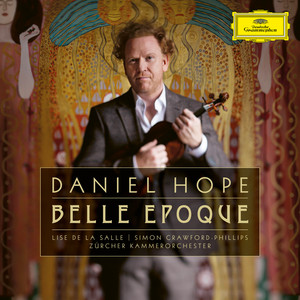 | Notturno for Strings and Harp | Arnold Schoenberg, Daniel Hope, Zürcher Kammerorchester, Jane Berthe | A♭ Major | 1 | 4B | 75 BPM | |
 | Lyric for Strings | George Walker, Chicago Sinfonietta, Paul Freeman | F♯ Major | 0 | 2B | 102 BPM | |
 | Woodland Suite: III. Moon-Fairy | George Dyson, BBC Symphony Orchestra, Richard Hickox | A Major | 0 | 11B | 74 BPM | |
 | String Quartet No. 1 in D Major, Op. 11, TH 111: II. Andante cantabile (Version for String Orchestra) | Pyotr Ilyich Tchaikovsky, Leonard Bernstein, New York Philharmonic | B♭ Major | 1 | 6B | 93 BPM | |
 | 2 Pieces for Small Orchestra: No. 1, On Hearing the First Cuckoo in Spring | Frederick Delius, Royal Scottish National Orchestra, David Lloyd-Jones | E Minor | 0 | 9A | 79 BPM | |
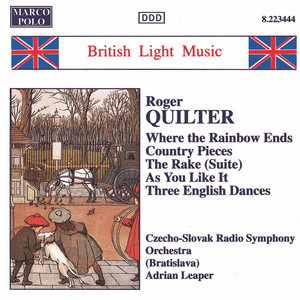 | Where the Rainbow Ends Suite (version for orchestra): No. 1a Rainbow Land | Roger Quilter, Slovak Radio Symphony Orchestra, Adrian Leaper | A Major | 0 | 11B | 69 BPM | |
 | Dona nobis pacem: Dirge for 2 Veterans | Ralph Vaughan Williams, Christina Pier, Matthew Brook, The Bach Choir, Bournemouth Symphony Orchestra, David Hill | F Major | 2 | 7B | 88 BPM | |
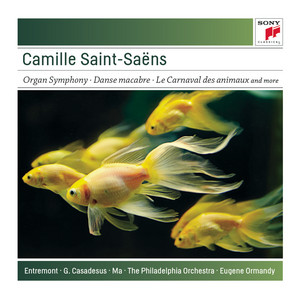 | Symphony No. 3 in C Minor, Op. 78 "Organ": Maestoso | Camille Saint-Saëns, Eugene Ormandy, E. Power Biggs, Philadelphia Orchestra | C Major | 1 | 8B | 49 BPM | |
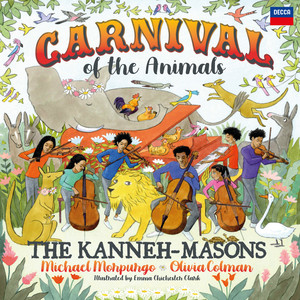 | The Seal Lullaby (Arr. Parkin) | Eric Whitacre, Isata Kanneh-Mason, Jeneba Kanneh-Mason, Braimah Kanneh-Mason, Konya Kanneh-Mason, Aminata Kanneh-Mason, Sheku Kanneh-Mason, Mariatu Kanneh-Mason | D♭ Major | 0 | 3B | 81 BPM | |
 | Albinoni: Adagio in G Minor | Tomaso Albinoni, Sir Neville Marriner, Academy of St. Martin in the Fields | C Minor | 1 | 5A | 90 BPM | |
 | Requiem, Op. 48: 4. Pie Jesu (I) | Gabriel Fauré, Catherine Bott, Orchestre Révolutionnaire et Romantique, John Eliot Gardiner | B♭ Major | 0 | 6B | 72 BPM |
- ISRC
- GBXSY1700063
- Label
- L-M Records/RCA Records