- BPM
- 134
- Key
- F♯ Major
- Camelot
- 2B
Sextet for string quartet, clarinet and piano: 3. Finale. Precise and rhythmic by Aaron Copland, RTÉ Vanbrugh Quartet, Michael Collins, Martin Roscoe Song Details
"Sextet for string quartet, clarinet and piano: 3. Finale. Precise and rhythmic" by Aaron Copland, RTÉ Vanbrugh Quartet, Michael Collins, Martin Roscoe had its release date on January 1, 2000. With this song being about 5 minutes long, at This song is fairly a long song compared to the average song length. This song does not have an "Explicit" tag, making it safe for all ages. The song is number 10 out of 10 in Copland: Sextet; Piano Quartet; Vitebsk; 2 Pieces for string quartet by Aaron Copland, RTÉ Vanbrugh Quartet, Martin Roscoe, Michael Collins. Going off of the ISRC code of this track, we detected that the origin of this track is from United Kingdom. Based on our statistics, Sextet for string quartet, clarinet and piano: 3. Finale. Precise and rhythmic's popularity is unknown right now. Although the tone can be danceable to some, this track does projects more of a negative sound rather than a postive one.
BPM and Tempo
The tempo marking of Sextet for string quartet, clarinet and piano: 3. Finale. Precise and rhythmic by Aaron Copland, RTÉ Vanbrugh Quartet, Michael Collins, Martin Roscoe is Allegro (fast, quick, and bright), since this song has a tempo of 134 BPM. With that information, we can conclude that the song has a fast tempo. This song can go great with walking. The time signature for this track is 5/4.
Music Key
F♯ Major is the music key of this track. This also means that this song has a camelot key of 2B. So, the perfect camelot match for 2B would be either 2B or 3A. While, 3B can give you a low energy boost. For moderate energy boost, you would use 11B and a high energy boost can either be 4B or 9B. Though, if you want a low energy drop, you should looking for songs with either a camelot key of 2A or 1B will give you a low energy drop, 5B would be a moderate one, and 12B or 7B would be a high energy drop. Lastly, 11A allows you to change the mood.
Want to find the BPM and music key for other songs? Check out our BPM and Key Finder page!
- Popularity
- 0%
- Loudness
- -18.084 dB
- Acousticness
- 97%
- Danceability
- 52%
- Energy
- 12%
- Instrumentalness
- 82%
- Liveness
- 15%
- Loudness
- 70%
- Speechiness
- 5%
- Valence
- 8%
Recommendations
| Track | Artist | Key | Energy | Camelot | BPM | ||
|---|---|---|---|---|---|---|---|
 | String Quintet No. 60 in C Major, G. 324 "La musica notturna delle strade di Madrid": I. Il campane quando suonano l'Ave Maria | Luigi Boccherini, Cuarteto Casals, Eckart Runge | C Major | 1 | 8B | 103 BPM | |
 | 4 Characteristic Waltzes, Op. 22: No. 1 Valse Bohemienne | Samuel Coleridge-Taylor, RTE Concert Orchestra, Adrian Leaper | E Minor | 1 | 9A | 81 BPM | |
 | Montgomery Variations: VI. Lament | Margaret Bonds, Kellen Gray, Royal Scottish National Orchestra | D Minor | 0 | 7A | 87 BPM | |
 | Grieg: The Last Spring, Op. 34, No. 2 | Edvard Grieg, San Francisco Symphony, Michael Tilson Thomas | G Major | 0 | 9B | 89 BPM | |
 | Ancient Airs & Dances, Suite III, P. 172: I. Italiana (Anonymous) | Ottorino Respighi, Berliner Philharmoniker, Herbert von Karajan | F Minor | 1 | 4A | 75 BPM | |
 | Suite No. 3, P. 172: III. Siciliana: Andantino | Ottorino Respighi, RTÉ National Symphony Orchestra | C Minor | 0 | 5A | 93 BPM | |
 | Pines Of Rome | Chicago Symphony Orchestra | F Major | 2 | 7B | 80 BPM | |
 | Violin Concerto No. 1 in G Minor, Op. 26: II. Adagio | Max Bruch, Joshua Bell, Academy of St. Martin in the Fields, Sir Neville Marriner | E♭ Major | 1 | 5B | 85 BPM | |
 | The Pirates of Penzance or The Slave of Duty: Overture | Arthur Sullivan, Royal Philharmonic Orchestra, Isidore Godfrey | G Major | 1 | 9B | 132 BPM | |
 | L'oiseau de feu, K. 10. Suite 1919: VII. Final | Igor Stravinsky, Budapest Festival Orchestra, Iván Fischer | A Major | 0 | 11B | 90 BPM | |
 | Piano Concerto No. 2 in F Major, Op. 102: I. Allegro | Dmitri Shostakovich, I Musici de Montréal, Maxim Shostakovich | B♭ Major | 3 | 6B | 160 BPM | |
 | Die Walküre: Magic Fire Music | Richard Wagner, George Szell, Cleveland Orchestra | G Major | 2 | 9B | 80 BPM | |
 | Quintettino Op.30 No.6, G.324: 4. Passacalle | Luigi Boccherini, Berliner Philharmoniker, Herbert von Karajan | D♭ Major | 1 | 3B | 77 BPM | |
 | Symphony No. 3 in C Minor, Op. 78 "Organ Symphony": 2b. Maestoso - Più allegro - Molto allegro | Camille Saint-Saëns, Peter Hurford, Orchestre Symphonique de Montréal, Charles Dutoit | G Major | 3 | 9B | 150 BPM | |
 | Rhapsody Under A High Sky | Archibald James Potter, RTE Sinfonietta, Proinnsias O'Duinn | C Major | 1 | 8B | 106 BPM | |
 | Scènes de ballet, Op. 52: II. Marionnettes | Alexander Glazunov, Moscow Philharmonic Orchestra, Alexander Anissimov | D Major | 0 | 10B | 69 BPM | |
 | Symphony No. 3 in C Minor: IV. Scherzo. Finale. Allegro | Florence Beatrice Price, Philadelphia Orchestra, Yannick Nézet-Séguin | C Minor | 3 | 5A | 132 BPM | |
 | Procession of the Nobles from "Mlada" Suite | Nikolai Rimsky-Korsakov, Eugene Ormandy, Philadelphia Orchestra, The Cleveland Pops Orchestra, Louis Lane | E♭ Major | 5 | 5B | 103 BPM | |
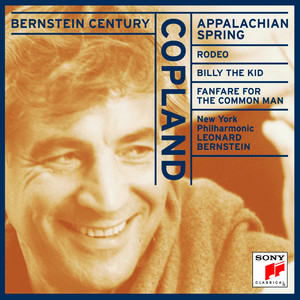 | 4 Dance Episodes from Rodeo: II. Corral Nocturne | Aaron Copland, Leonard Bernstein, New York Philharmonic | C Major | 0 | 8B | 92 BPM | |
 | A Village Romeo and Juliet: The Walk to the Paradise Garden | Frederick Delius, Royal Scottish National Orchestra, David Lloyd-Jones | E Major | 0 | 12B | 70 BPM | |
 | The Unanswered Question | Charles Ives, Cincinnati Philharmonia Orchestra, Gerhard Samuel | C Major | 0 | 8B | 68 BPM | |
| 3 Small Tone Poems: No. 3, Spring Morning | Frederick Delius, Royal Scottish National Orchestra, David Lloyd-Jones | A Major | 0 | 11B | 89 BPM | |
 | Billy the Kid: No. 6, Celebration | Aaron Copland, Colorado Symphony, Andrew Litton | D Major | 0 | 10B | 92 BPM | |
 | The Red Pony Suite: I. Morning On The Ranch | Aaron Copland, Buffalo Philharmonic Orchestra | F Major | 1 | 7B | 75 BPM | |
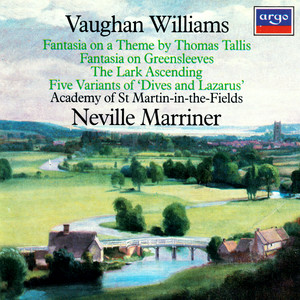 | Fantasia on Greensleeves | Ralph Vaughan Williams, Academy of St. Martin in the Fields, Sir Neville Marriner | C Minor | 1 | 5A | 89 BPM |
- ISRC
- GBBJY0200100
- Label
- L-M Records/RCA Records