- BPM
- 77
- Key
- E♭ Major
- Camelot
- 5B
Enigma Variations, Op. 36: Variation 9: Nimrod by Edward Elgar, Andrew Davis, Philharmonia Orchestra Song Details
"Enigma Variations, Op. 36: Variation 9: Nimrod" by Edward Elgar, Andrew Davis, Philharmonia Orchestra had its release date on 1982. With this song being around four minutes long, at 3:57, the duration of this song is pretty average compared to other songs. This track is safe for children and doesn't appear to contain any foul language, since the "Explicit" tag was not present in this track. The song is number 10 out of 20 in Elgar: Enigma Variations, Op. 36; Pomp and Circumstance Marches Nos. 1-5, Op. 39 by Edward Elgar, Andrew Davis. Going off of the ISRC code of this track, we detected that the origin of this track is from United States. Enigma Variations, Op. 36: Variation 9: Nimrod is not that popular right now. In our opinion, the overall tone is not very danceable and projects negative sounds, such as being sad, depressed, or angry.
BPM and Tempo
The tempo marking of Enigma Variations, Op. 36: Variation 9: Nimrod by Edward Elgar, Andrew Davis, Philharmonia Orchestra is Andante (at a walking pace), since this song has a tempo of 77 BPM. With that information, we can conclude that the song has a slow tempo. The time signature for this track is 4/4.
Music Key
E♭ Major is the music key of this track. This also means that this song has a camelot key of 5B. So, the perfect camelot match for 5B would be either 5B or 6A. While, 6B can give you a low energy boost. For moderate energy boost, you would use 2B and a high energy boost can either be 7B or 12B. Though, if you want a low energy drop, you should looking for songs with either a camelot key of 5A or 4B will give you a low energy drop, 8B would be a moderate one, and 3B or 10B would be a high energy drop. Lastly, 2A allows you to change the mood.
Want to find the BPM and music key for other songs? Check out our BPM and Key Finder page!
- Popularity
- 6%
- Loudness
- -22.656 dB
- Acousticness
- 95%
- Danceability
- 11%
- Energy
- 7%
- Instrumentalness
- 83%
- Liveness
- 12%
- Loudness
- 62%
- Speechiness
- 4%
- Valence
- 4%
Recommendations
| Track | Artist | Key | Energy | Camelot | BPM | ||
|---|---|---|---|---|---|---|---|
 | Handel / Orch. Hale: Keyboard Suite No. 4 in D Minor, HWV 437: III. Sarabande | George Frideric Handel, Alexander Briger, Academy of St. Martin in the Fields | D Minor | 0 | 7A | 116 BPM | |
 | Orfeo ed Euridice, Wq. 30: Dance of the Blessed Spirits "Melody" (Arr. Sgambati for Piano) | Christoph Willibald Gluck, Yuja Wang | D Minor | 0 | 7A | 70 BPM | |
 | Piano Concerto No. 2 in F Major, Op. 102: II. Andante | Dmitri Shostakovich, Esa-Pekka Salonen, Yefim Bronfman, Thomas Stevens, Los Angeles Philharmonic | G Minor | 1 | 6A | 137 BPM | |
 | Peer Gynt Suite No.1 op. 46 Anitra's Dance (Tempo di Mazurka) | Academy of St. Martin in the Fields | E Minor | 0 | 9A | 168 BPM | |
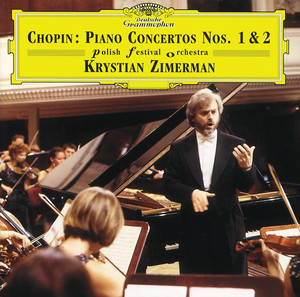 | Piano Concerto No.2 In F Minor, Op.21: 2. Larghetto | Frédéric Chopin, Krystian Zimerman, Polish Festival Orchestra | A♭ Major | 0 | 4B | 77 BPM | |
 | Pavane pour une infante défunte, M. 19 (Orchestral Version) | Maurice Ravel, Academy of St. Martin in the Fields, Sir Neville Marriner | G Major | 0 | 9B | 142 BPM | |
 | Ma mère l'oye, Ballet, M. 62: XI. Apothéose. Le jardin féerique | Maurice Ravel, Berliner Philharmoniker, Pierre Boulez | C Major | 0 | 8B | 83 BPM | |
 | Symphony No. 8 in B Minor, D. 759 "Unfinished": 1. Allegro moderato | Franz Schubert, Berliner Philharmoniker, Herbert von Karajan | B Minor | 1 | 10A | 107 BPM | |
 | Adagio in G minor (Arr. Giazotto & Palmer) | Julian Lloyd Webber, English Chamber Orchestra, Nicholas Cleobury | C Minor | 1 | 5A | 82 BPM | |
 | Fedora, Act II: Intermezzo | Umberto Giordano, Berliner Philharmoniker, Herbert von Karajan | E Major | 2 | 12B | 128 BPM | |
 | Phantasy Quintet: III. Alla Sarabanda: Lento | Ralph Vaughan Williams, Garfield Jackson, Maggini Quartet | E♭ Minor | 10 | 2A | 123 BPM | |
 | Schubert: Rosamunde, Op. 26, D. 797: Entr'acte No. 3, Andantino | Franz Schubert, San Francisco Symphony, Michael Tilson Thomas | B♭ Major | 0 | 6B | 69 BPM | |
 | Messiah, HWV 56, Pt. I: Pastoral Symphony, "Pifa" (Arr. L. Stokowski) | George Frideric Handel, Bournemouth Symphony Orchestra, José Serebrier | C Major | 0 | 8B | 84 BPM | |
 | Dvořák: 7 Gipsy Melodies, Op. 55, B. 104: No. 4, Als die alte Mutter (Transcr. for Trumpet and Orchestra) | Antonín Dvořák, Tine Thing Helseth, Eivind Aadland, Royal Liverpool Philharmonic Orchestra | D Major | 1 | 10B | 92 BPM | |
 | Rhapsody on a Theme of Paganini, Op. 43: Variation 18 | Sergei Rachmaninoff, Bernd Glemser, Polish National Radio Symphony Orchestra, Antoni Wit | D♭ Major | 1 | 3B | 76 BPM | |
 | Ludus pro Patria, La Nuit et l'Amour: La Nuit et l'Amour: Interlude de l'ode symphonique - Ludus pro Patria | Augusta Holmès, Staatsphilharmonie Rheinland-Pfalz, Patrick Davin | B♭ Major | 0 | 6B | 78 BPM | |
 | Oboe Concerto in D Minor, S. Z799: II. Adagio | Alessandro Marcello, Heinz Holliger, I Musici | D Minor | 1 | 7A | 79 BPM | |
 | Violin Concerto No. 1 in G Minor, Op. 26: II. Adagio | Max Bruch, Itzhak Perlman, Bernard Haitink, Royal Concertgebouw Orchestra | E♭ Major | 1 | 5B | 87 BPM | |
 | Piano Concerto No. 2 in F Major, Op. 102: II. Andante | Dmitri Shostakovich, I Musici de Montréal, Maxim Shostakovich | C Minor | 0 | 5A | 177 BPM | |
 | Simple Symphony, Op. 4: III. Sentimental Saraband | Benjamin Britten, English Chamber Orchestra | G Minor | 1 | 6A | 82 BPM | |
 | The Seasons, Op. 67: XIV. Petit Adagio | Alexander Glazunov, Neeme Järvi, Royal Scottish National Orchestra | A Major | 1 | 11B | 87 BPM | |
 | Piano Concerto in C-Sharp Minor, FP 146: I. Allegretto commodo - Live | Francis Poulenc, Yannick Nézet-Séguin, London Philharmonic Orchestra, Alexandre Tharaud | A♭ Major | 1 | 4B | 86 BPM | |
 | String Quartet No. 1 in D Major, Op. 11, TH 111: II. Andante cantabile | Pyotr Ilyich Tchaikovsky, Heath Quartet | A Minor | 1 | 8A | 82 BPM | |
 | Les Boréades, RCT 31, Acte IV, Scène IV: Entrée pour les Muses, les Zéphyres, les Saisons, les Heures et les Arts | Jean-Philippe Rameau, Teodor Currentzis | D♭ Major | 1 | 3B | 130 BPM | |
 | 4 Impromptus, Op. 90, D. 899: No. 3 in G-flat major | Franz Schubert, Khatia Buniatishvili | F♯ Major | 0 | 2B | 69 BPM |
- ISRC
- USSM18100577
- Label
- L-M Records/RCA Records