- BPM
- 79
- Key
- E Minor
- Camelot
- 9A
The Running Set by Ralph Vaughan Williams, Northern Sinfonia of England/Bradley Creswick/Richard Hickox, Richard Hickox, Northern Sinfonia Of England Song Details
Ralph Vaughan Williams, Northern Sinfonia of England/Bradley Creswick/Richard Hickox, Richard Hickox, Northern Sinfonia Of England's ' "The Running Set" was released on its scheduled release date, June 5, 2000. This song is about six minutes long, preciously at 6:18, making this song fairly long compared to other songs. The track order of this song in Ralph Vaughan Williams, Richard Hickox, Northern Sinfonia Of England's "Hickox conducts Vaughan Williams" album is number 16 out of 36. The Running Set is not that popular right now. The mood doesn't appear to be that danceable, but it still produces a high amount of positive energy.
BPM and Tempo
We consider the tempo marking of The Running Set by Ralph Vaughan Williams, Northern Sinfonia of England/Bradley Creswick/Richard Hickox, Richard Hickox, Northern Sinfonia Of England to be Andante (at a walking pace) because the track has a tempo of 79 BPM, a half-time of 40BPM, and a double-time of 158 BPM. Based on that, the speed of the song's tempo is slow. The time signature for this track is 4/4.
Music Key
This song has a musical key of E Minor. Because this track belongs in the E Minor key, the camelot key is 9A. So, the perfect camelot match for 9A would be either 9A or 8B. While, a low energy boost can consist of either 9B or 10A. For moderate energy boost, you would use 6A and a high energy boost can either be 11A or 4A. However, if you are looking for a low energy drop, finding a song with a camelot key of 8A would be a great choice. Where 12A would give you a moderate drop, and 7A or 2A would be a high energy drop. Lastly, 12B allows you to change the mood.
Want to find the BPM and music key for other songs? Check out our BPM and Key Finder page!
- Popularity
- 1%
- Loudness
- -19.025 dB
- Acousticness
- 95%
- Danceability
- 38%
- Energy
- 30%
- Instrumentalness
- 94%
- Liveness
- 10%
- Loudness
- 68%
- Speechiness
- 4%
- Valence
- 71%
Recommendations
| Track | Artist | Key | Energy | Camelot | BPM | ||
|---|---|---|---|---|---|---|---|
 | Violin Concerto No. 1 in G Minor, Op. 26: III. Allegro energico | Max Bruch, Itzhak Perlman, Bernard Haitink, Royal Concertgebouw Orchestra | G Major | 3 | 9B | 97 BPM | |
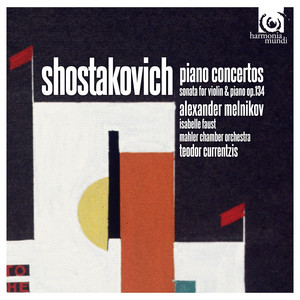 | Piano Concerto No. 2 Op. 102 in F Major: II. Andante | Dmitri Shostakovich, Alexander Melnikov, Mahler Chamber Orchestra, Teodor Currentzis | C Minor | 0 | 5A | 78 BPM | |
 | 3 Portraits From England Of Elizabeth: Poet | RTE Concert Orchestra, Ralph Vaughan Williams | A Minor | 0 | 8A | 87 BPM | |
 | Sospiri, Op. 70 | Edward Elgar, Academy of St. Martin in the Fields, Sir Neville Marriner | F Major | 1 | 7B | 177 BPM | |
 | Carmen Suite No. 1: III. Intermezzo, Interlude before Act III | Georges Bizet, Marc Soustrot, Aarhus Symphony Orchestra | D Major | 1 | 10B | 134 BPM | |
 | English Folk Song Suite: 2. Intermezzo: My Bonny Boy | Ralph Vaughan Williams, Academy of St. Martin in the Fields, Sir Neville Marriner | C Minor | 0 | 5A | 64 BPM | |
 | Lyric for Strings | George Walker, Chicago Sinfonietta, Paul Freeman | F♯ Major | 0 | 2B | 102 BPM | |
 | Love's Labour's Lost, Op. 28a: II. Longaville's Sonnet | Gerald Finzi, Robert Plane, Royal Northern Sinfonia, Howard Griffiths | D Minor | 0 | 7A | 94 BPM | |
 | Saint-Saëns: Le carnaval des animaux, R 125: XIII. Le cygne (Arr. for Cello and Harp) | Camille Saint-Saëns, Jacqueline du Pré, Osian Ellis | G Major | 0 | 9B | 60 BPM | |
 | Woodland Suite: III. Moon-Fairy | George Dyson, BBC Symphony Orchestra, Richard Hickox | A Major | 0 | 11B | 74 BPM | |
 | English Pastoral Impressions: I. Spring Morning | John Farrar, Alasdair Mitchell, Philharmonic Orchestra, Howard Shelley | E♭ Major | 0 | 5B | 101 BPM | |
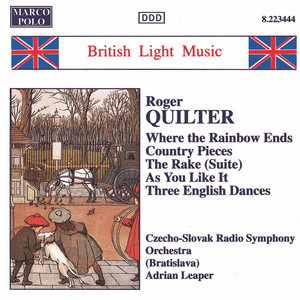 | Where the Rainbow Ends Suite (version for orchestra): No. 1a Rainbow Land | Roger Quilter, Slovak Radio Symphony Orchestra, Adrian Leaper | A Major | 0 | 11B | 69 BPM | |
| Violin Concerto No. 1 in G Minor, Op. 26: II. Adagio | Max Bruch, Itzhak Perlman, Bernard Haitink, Royal Concertgebouw Orchestra | E♭ Major | 1 | 5B | 87 BPM | |
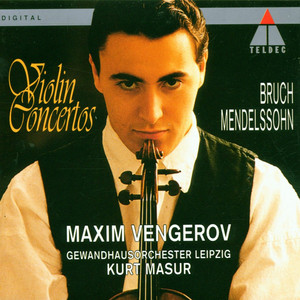 | Bruch : Violin Concerto No.1 in G minor Op.26 : III Finale - Allegro energico | Max Bruch, Maxim Vengerov, Kurt Masur, Gewandhausorchester Leipzig | G Major | 2 | 9B | 90 BPM | |
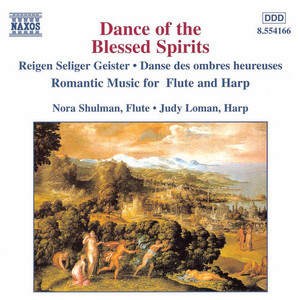 | Sicilienne, Op. 78 (arr. for flute and harp) | Donald Sosin, Gabriel Fauré, Nora Shulman, Judy Loman | B♭ Major | 1 | 6B | 153 BPM | |
 | Appalachian Spring: VII. Doppio movimento | Aaron Copland, Leonard Bernstein, New York Philharmonic | D♭ Major | 1 | 3B | 78 BPM | |
 | Orpheo ed Euridice, Wq. 30, Act II: Dance of the Blessed Spirits | Christoph Willibald Gluck, Eugene Ormandy, Philadelphia Orchestra | D Minor | 1 | 7A | 67 BPM | |
 | Was mir behagt, ist nur die muntre Jagd, BWV 208, "Hunt Cantata": Aria. Schafe können sicher weiden (Sheep May Safely Graze) [arr. R. Hayman] | Johann Sebastian Bach, Philharmonic Symphony Orchestra, Richard Hayman | D Minor | 2 | 7A | 79 BPM | |
 | Delius / Arr. Fenby: Koanga, Act II: La Calinda | Frederick Delius, Sir John Barbirolli, Hallé | E Minor | 4 | 9A | 116 BPM | |
 | Orfeo ed Euridice, Wq. 30: Dance of the Blessed Spirits "Melody" (Arr. Sgambati for Piano) | Christoph Willibald Gluck, Yuja Wang | D Minor | 0 | 7A | 70 BPM | |
 | Greensleeves | Ralph Vaughan Williams, Sir Simon Rattle, Berliner Symphoniker | C Minor | 1 | 5A | 80 BPM | |
 | 5 Bagatelles, Op. 23a (Arr. L. Ashmore for Clarinet & Strings): No. 3, Carol. Andante semplice | Gerald Finzi, Robert Plane, Royal Northern Sinfonia, Howard Griffiths | B♭ Major | 0 | 6B | 78 BPM | |
 | Polovetsian Dances from Prince Igor: Introduzione | Alexander Borodin, George Szell, The Cleveland Orchestra | A Major | 1 | 11B | 83 BPM | |
 | Belshazzar's Feast, JS 48: Prelude. Nocturno | Jean Sibelius, Turku Philharmonic Orchestra, Leif Segerstam | G Major | 2 | 9B | 98 BPM | |
 | A Song of the Night, Op. 19, No. 1, H. 74 | Gustav Holst, Janice Graham, English Sinfonia, Howard Griffiths | C Minor | 1 | 5A | 88 BPM |
- ISRC
- This song does not have an ISRC.
- Label
- L-M Records/RCA Records