- BPM
- 141
- Key
- B♭ Major
- Camelot
- 6B
Symphony No. 5 in D Major: I. Preludio: Moderato - Allegro - Tempo I by Ralph Vaughan Williams, Bournemouth Symphony Orchestra, Kees Bakels Song Details
"Symphony No. 5 in D Major: I. Preludio: Moderato - Allegro - Tempo I" by Ralph Vaughan Williams, Bournemouth Symphony Orchestra, Kees Bakels had its release date on December 3, 1998. This song appears to be safe for all ages as it is not explicit. This song is part of Vaughan Williams: Symphonies Nos. 5 and 9 by Ralph Vaughan Williams, Kees Bakels. The song's track number on the album is #1 out of 8 tracks. Based on our data, Hong Kong was the country where this track was produced or recorded. Based on our statistics, Symphony No. 5 in D Major: I. Preludio: Moderato - Allegro - Tempo I's popularity is not that popular right now. In our opinion, the overall tone is not very danceable and projects negative sounds, such as being sad, depressed, or angry.
BPM and Tempo
Since Symphony No. 5 in D Major: I. Preludio: Moderato - Allegro - Tempo I by Ralph Vaughan Williams, Bournemouth Symphony Orchestra, Kees Bakels has a tempo of 141 beats per a minute, the tempo markings of this song would be Allegro (fast, quick, and bright). With Symphony No. 5 in D Major: I. Preludio: Moderato - Allegro - Tempo I being at 141 BPM, the half-time would be 70 BPM with a double-time of 282 BPM.In addition, we consider the tempo speed to be pretty fast for this song. This makes this song perfect for activities such as, jogging or cycling. The time signature for this track is 3/4.
Music Key
This song has a musical key of B♭ Major. Or for those who are familiar with the camelot wheel, this song has a camelot key of 6B. So, the perfect camelot match for 6B would be either 6B or 7A. While, 7B can give you a low energy boost. For moderate energy boost, you would use 3B and a high energy boost can either be 8B or 1B. Though, if you want a low energy drop, you should looking for songs with either a camelot key of 6A or 5B will give you a low energy drop, 9B would be a moderate one, and 4B or 11B would be a high energy drop. Lastly, 3A allows you to change the mood.
Want to find the BPM and music key for other songs? Check out our BPM and Key Finder page!
- Popularity
- 2%
- Loudness
- -22.105 dB
- Acousticness
- 87%
- Danceability
- 14%
- Energy
- 5%
- Instrumentalness
- 87%
- Liveness
- 8%
- Loudness
- 63%
- Speechiness
- 4%
- Valence
- 6%
Recommendations
| Track | Artist | Key | Energy | Camelot | BPM | ||
|---|---|---|---|---|---|---|---|
 | Piano Concerto No. 2 in F Major, Op. 102: II. Andante | Dmitri Shostakovich, Yuja Wang, Boston Symphony Orchestra, Andris Nelsons | F Major | 1 | 7B | 104 BPM | |
 | Serenade for String Orchestra in C Major, Op. 48, TH 48: II. Valse | Pyotr Ilyich Tchaikovsky, The Russian Virtuosi of Europe, Yuri Zhislin | G Major | 2 | 9B | 98 BPM | |
 | There Will Come | Rebecca Dale, Philharmonia Orchestra, Michael Collins, Steven Isserlis | B♭ Major | 1 | 6B | 67 BPM | |
 | Appalachian Spring: I. Very Slowly | Aaron Copland, Leonard Bernstein, New York Philharmonic | A Major | 0 | 11B | 78 BPM | |
 | Brook Green Suite: I. Prelude | Gustav Holst, English Sinfonia, Howard Griffiths | D♭ Major | 0 | 3B | 66 BPM | |
 | Capriol Suite: 1. Basse-danse | Peter Warlock, Academy of St. Martin in the Fields, Nicholas Kraemer, Sir Neville Marriner | D Minor | 2 | 7A | 133 BPM | |
| Serenade for String Orchestra in C Major, Op. 48, TH 48: I. Pezzo in forma di sonatina | Pyotr Ilyich Tchaikovsky, The Russian Virtuosi of Europe, Yuri Zhislin | C Major | 2 | 8B | 125 BPM | |
 | Eclogue for Piano and Strings, Op. 10 | Gerald Finzi, Peter Donohoe, Royal Northern Sinfonia, Howard Griffiths | F Minor | 1 | 4A | 66 BPM | |
 | Bizet / Arr. Guiraud: Carmen Suite No. 1: III. Intermezzo | Georges Bizet, Seiji Ozawa, Orchestre National De France | E♭ Major | 0 | 5B | 74 BPM | |
 | Piano Concerto No. 2 in F Major, Op. 102: II. Andante | Dmitri Shostakovich, Michael Houstoun, New Zealand Symphony Orchestra, Christopher Lyndon-Gee | F Major | 1 | 7B | 147 BPM | |
 | Dvořák: Nocturne, Op. 40, B. 47 | Antonín Dvořák, Sir Neville Marriner, Neville Marriner, Academy of St. Martin in the Fields | A Major | 1 | 11B | 93 BPM | |
 | Symphony No. 3, "Pastoral Symphony": III. Moderato pesante | Ralph Vaughan Williams, Brendan O'Brien, Patricia Rozario, Bournemouth Symphony Orchestra, Kees Bakels | C Major | 0 | 8B | 88 BPM | |
 | Symphony No. 3 In C Minor, Op. 78 "Organ Symphony": 1. Adagio - Allegro moderato - Poco adagio | Camille Saint-Saëns, Simon Preston, Berliner Philharmoniker, James Levine | A♭ Major | 1 | 4B | 118 BPM | |
 | Appalachian Spring Suite: I. Very Slowly | Aaron Copland, Los Angeles Philharmonic, Zubin Mehta | A Major | 0 | 11B | 71 BPM | |
 | The Planets, Op. 32: 7. Neptune, the Mystic | Gustav Holst, Berliner Philharmoniker, Herbert von Karajan, RIAS Kammerchor | A♭ Minor | 0 | 1A | 58 BPM | |
 | Henry V: "Touch her Soft Lips and Part" (1944) | William Walton, Itzhak Perlman, John Williams, Boston Pops Orchestra | B Minor | 1 | 10A | 98 BPM | |
 | Kol Nidrei - Adagio For Cello, Opus 47 | Max Bruch, Alisa Weilerstein, Staatskapelle Berlin, Daniel Barenboim | D Major | 1 | 10B | 81 BPM | |
 | Piano Concerto No. 2 Op. 102 in F Major: II. Andante | Dmitri Shostakovich, Alexander Melnikov, Mahler Chamber Orchestra, Teodor Currentzis | C Minor | 0 | 5A | 78 BPM | |
 | Whitacre: Lux Aurumque | Eric Whitacre, Eric Whitacre Singers | D♭ Minor | 0 | 12A | 72 BPM | |
 | Ladies In Lavender - Main Theme - (Ladies in Lavender) | Nigel Hess, Nicola Benedetti, Bournemouth Symphony Orchestra, Kirill Karabits | D Major | 2 | 10B | 87 BPM | |
 | Nocturne | Alexander Borodin, Julian Lloyd Webber, Royal Philharmonic Orchestra, James Judd | D Minor | 1 | 7A | 69 BPM | |
 | Vaughan Williams: Job, a Masque for Dancing, Scene 9: Epilogue | Ralph Vaughan Williams, Andrew Davis, BBC Symphony Orchestra | G Minor | 0 | 6A | 99 BPM | |
 | Simple Symphony, Op. 4: Frolicsome Finale | Benjamin Britten, Royal Northern Sinfonia, Steuart Bedford | G Major | 2 | 9B | 155 BPM | |
 | Holberg Suite, Op. 40: V. Rigaudon (Allegro con brio) | Edvard Grieg, Gothenburg Symphony Orchestra, Neeme Järvi | E Major | 1 | 12B | 71 BPM | |
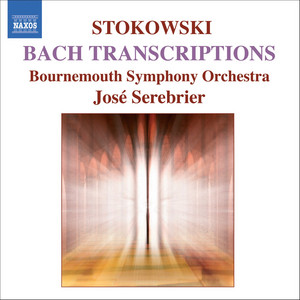 | Dido & Aeneas, Z. 626: When I Am Laid in Earth "Dido's Lament" (Transcr. L. Stokowski) | Henry Purcell, Timothy Walden, Bournemouth Symphony Orchestra, José Serebrier | E Major | 0 | 12B | 76 BPM |
- ISRC
- HKI199612701
- Label
- L-M Records/RCA Records