- BPM
- 85
- Key
- F♯ Minor
- Camelot
- 11A
Seven Part Songs: Assemble All Ye Maidens by Gustav Holst, Susan Longfield, The Purcell Singers, English Chamber Orchestra, Imogen Holst Song Details
"Seven Part Songs: Assemble All Ye Maidens" by Gustav Holst, Susan Longfield, The Purcell Singers, English Chamber Orchestra, Imogen Holst had its release date on January 1, 2011. Since This song is still less than 10 minute long, it is still considered a pretty long duration song compared to the average song length. This song does not appear to be explicit due to the lack of the "E" tag. The track order of this song in Gustav Holst, Janet Baker, Robert Tear, Thomas Hemsley, The Purcell Singers, English Chamber Orchestra, Imogen Holst's "Holst: Choral Hymns From The Rig Veda; Savitri; Seven Part-Songs; The Evening Watch" album is number 16 out of 17. On top of that, United Kingdom appears to be the country where this track was created. Seven Part Songs: Assemble All Ye Maidens is unknown right now. In our opinion, the overall tone is not very danceable and projects negative sounds, such as being sad, depressed, or angry.
BPM and Tempo
We consider the tempo marking of Seven Part Songs: Assemble All Ye Maidens by Gustav Holst, Susan Longfield, The Purcell Singers, English Chamber Orchestra, Imogen Holst to be Andante (at a walking pace) because the track has a tempo of 85 BPM, a half-time of 42BPM, and a double-time of 170 BPM. Based on that, the speed of the song's tempo is slow. Activities such as, yoga or pilates, can go well with this song. The time signature for this track is 4/4.
Music Key
This song is in the music key of F♯ Minor. This also means that this song has a camelot key of 11A. So, the perfect camelot match for 11A would be either 11A or 10B. While, a low energy boost can consist of either 11B or 12A. For moderate energy boost, you would use 8A and a high energy boost can either be 1A or 6A. However, if you are looking for a low energy drop, finding a song with a camelot key of 10A would be a great choice. Where 2A would give you a moderate drop, and 9A or 4A would be a high energy drop. Lastly, 2B allows you to change the mood.
Want to find the BPM and music key for other songs? Check out our BPM and Key Finder page!
- Popularity
- 0%
- Loudness
- -28.863 dB
- Acousticness
- 98%
- Danceability
- 21%
- Energy
- 4%
- Instrumentalness
- 0%
- Liveness
- 22%
- Loudness
- 52%
- Speechiness
- 5%
- Valence
- 5%
Recommendations
| Track | Artist | Key | Energy | Camelot | BPM | ||
|---|---|---|---|---|---|---|---|
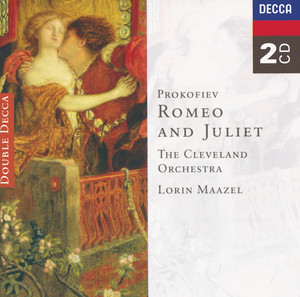 | Romeo and Juliet, Op. 64: Introduction | Sergei Prokofiev, The Cleveland Orchestra, Lorin Maazel | E Major | 1 | 12B | 112 BPM | |
 | Capriccio espagnol, Op. 34: II. Variations | Nikolai Rimsky-Korsakov, Seattle Symphony Orchestra, Gerard Schwarz | F Major | 0 | 7B | 92 BPM | |
 | Scheherazade: The princess in a palanquin | Nikolai Rimsky-Korsakov, Lars Hjalmar Joakim | G Major | 1 | 9B | 166 BPM | |
 | Gaîté parisienne: Barcarolle | Jacques Offenbach, Berliner Philharmoniker, Herbert von Karajan | D Major | 0 | 10B | 82 BPM | |
 | Second Suite in F Major, Op. 28 No. 2, H. 106: I. March | Gustav Holst, North Texas Wind Symphony, Eugene Migliaro Corporon | C Minor | 0 | 5A | 67 BPM | |
 | Rodeo: No. 5, Hoe-Down | Aaron Copland, Colorado Symphony, Andrew Litton | D Major | 2 | 10B | 127 BPM | |
 | The Planets Suite, Op. 32: VII. Neptune | Gustav Holst, Vladimir Jurowski, Neville Creed, London Philharmonic Choir, London Philharmonic Orchestra | E Major | 0 | 12B | 95 BPM | |
| The Planets Suite, Op. 32: III. Mercury | Gustav Holst, Vladimir Jurowski, London Philharmonic Orchestra, London Philharmonic Choir, Neville Creed | D Minor | 1 | 7A | 125 BPM | |
 | Japanese Suite, Op. 33, H. 126: II. Ceremonial Dance | Gustav Holst, Ulster Orchestra, Joann Falletta | C Minor | 3 | 5A | 103 BPM | |
 | Ancient Airs & Dances, Suite III, P. 172: IV. Passacaglia (Roncalli) | Ottorino Respighi, Boston Symphony Orchestra, Seiji Ozawa | G Minor | 3 | 6A | 116 BPM | |
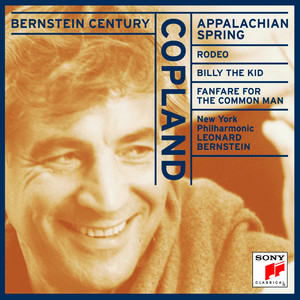 | Appalachian Spring: II. Allegro | Aaron Copland, Leonard Bernstein, New York Philharmonic | F Major | 4 | 7B | 82 BPM | |
 | Sibelius: Symphony No. 5 in E-Flat Major, Op. 82: III. Allegro molto | Jean Sibelius, Sakari Oramo, City Of Birmingham Symphony Orchestra | A♭ Major | 1 | 4B | 149 BPM | |
 | Symphony No. 7 in E Major, WAB 107 (Ed. Haas): III. Scherzo. Sehr schnell - Trio. Etwas langsamer | Anton Bruckner, Wiener Philharmoniker, Herbert von Karajan | F Major | 2 | 7B | 74 BPM | |
 | Petite suite, L. 65: No. 1, En bateau (Orch. H. Buser) | Claude Debussy, フランス国立リヨン管弦楽団, 準・メルクル | E♭ Major | 1 | 5B | 92 BPM | |
 | Sibelius: Symphony No. 2 in D Major, Op. 43: I. Allegretto | Jean Sibelius, Herbert von Karajan, Philharmonia Orchestra | E Minor | 0 | 9A | 124 BPM | |
 | The Bartered Bride: Overture | Bedřich Smetana, BBC Symphony Orchestra, Jiří Bělohlávek | F Major | 2 | 7B | 145 BPM | |
 | The Planets, Op. 32: I. Mars, the Bringer of War | Gustav Holst, Berliner Philharmoniker, Herbert von Karajan | A♭ Major | 5 | 4B | 149 BPM | |
 | Souvenir de Florence, Op. 70: II. Adagio cantabile | Pyotr Ilyich Tchaikovsky, Wiener KammerOrchester, Philippe Entremont | D Major | 1 | 10B | 91 BPM | |
 | Notturno for Strings and Harp | Arnold Schoenberg, Daniel Hope, Zürcher Kammerorchester, Jane Berthe | A♭ Major | 1 | 4B | 75 BPM | |
 | Piano Concerto No. 2 in F Major, Op. 102: I. Allegro | Dmitri Shostakovich, I Musici de Montréal, Maxim Shostakovich | B♭ Major | 3 | 6B | 160 BPM | |
 | Suite algérienne, Op. 60: IV. Marche militaire française | Camille Saint-Saëns, Eugene Ormandy, Philadelphia Orchestra | C Major | 3 | 8B | 118 BPM | |
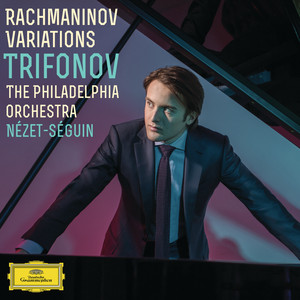 | Rhapsody on a Theme of Paganini, Op. 43: Variation No. 18 Andante cantabile | Sergei Rachmaninoff, Daniil Trifonov, Philadelphia Orchestra, Yannick Nézet-Séguin | D♭ Major | 1 | 3B | 88 BPM | |
 | Othello, Op. 79: II. Children's Intermezzo | Samuel Coleridge-Taylor, RTE Concert Orchestra, Adrian Leaper | F Major | 0 | 7B | 113 BPM | |
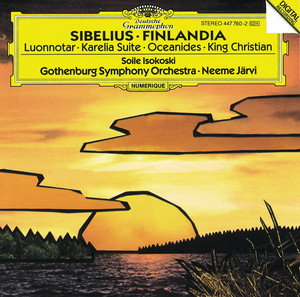 | Karelia Suite, Op.11: 1. Intermezzo (Moderato) | Jean Sibelius, Gothenburg Symphony Orchestra, Neeme Järvi | E♭ Major | 1 | 5B | 182 BPM | |
 | Symphony No. 10 in E Minor, Op. 93: II. Allegro | Dmitri Shostakovich, Berliner Philharmoniker, Kirill Petrenko | E♭ Major | 1 | 5B | 86 BPM |
- ISRC
- GBF076510687
- Label
- L-M Records/RCA Records