- BPM
- 114
- Key
- D Major
- Camelot
- 10B
L'Histoire du Soldat (The Soldier's Tale) - Part II: Narration by Igor Stravinsky, Eastman Wind Ensemble, Jan Opalach, Mark Scatterday Song Details
Igor Stravinsky, Eastman Wind Ensemble, Jan Opalach, Mark Scatterday's ' "L'Histoire du Soldat (The Soldier's Tale) - Part II: Narration" was released on its scheduled release date, February 12, 2013. With This song being less than two minutes long, at 1:41, we are fairly confident that this song is not explicit and is safe for all ages. Based on the duration of this song, this song duration is much smaller than the average song duration. There are a total of 28 in the song's album "Stravinsky: Octet & L'Histoire du Soldat". In this album, this song's track order is #27. Furthermore, we believe that the track originated from United Kingdom. In terms of popularity, L'Histoire du Soldat (The Soldier's Tale) - Part II: Narration is currently unknown. The overall tone is very danceable, especially with its high energy, which produces more of a euphoric, cheerful, or happy vibe.
BPM and Tempo
With L'Histoire du Soldat (The Soldier's Tale) - Part II: Narration by Igor Stravinsky, Eastman Wind Ensemble, Jan Opalach, Mark Scatterday having a BPM of 114 with a half-time of 57 BPM and a double-time of 228 BPM, we would consider this track to have a Moderato (at a moderate speed) tempo marking. Because of this, we believe that the song has an overall moderate tempo. The time signature for this track is 4/4.
Music Key
This song is in the music key of D Major. Or for those who are familiar with the camelot wheel, this song has a camelot key of 10B. So, the perfect camelot match for 10B would be either 10B or 11A. While, 11B can give you a low energy boost. For moderate energy boost, you would use 7B and a high energy boost can either be 12B or 5B. Though, if you want a low energy drop, you should looking for songs with either a camelot key of 10A or 9B will give you a low energy drop, 1B would be a moderate one, and 8B or 3B would be a high energy drop. Lastly, 7A allows you to change the mood.
Want to find the BPM and music key for other songs? Check out our BPM and Key Finder page!
- Popularity
- 0%
- Loudness
- -13.598 dB
- Acousticness
- 88%
- Danceability
- 83%
- Energy
- 48%
- Instrumentalness
- 91%
- Liveness
- 10%
- Loudness
- 77%
- Speechiness
- 5%
- Valence
- 77%
Recommendations
| Track | Artist | Key | Energy | Camelot | BPM | ||
|---|---|---|---|---|---|---|---|
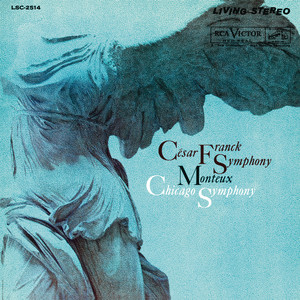 | Symphony in D Minor, FWV 48 (Remastered): II. Allegretto | César Franck, Pierre Monteux, Chicago Symphony Orchestra | E♭ Minor | 0 | 2A | 72 BPM | |
 | The Rite of Spring: Part Two: The Sacrifice: Sacrificial Dance (The Chosen One) | Igor Stravinsky, Teodor Currentzis, musicAeterna | D Minor | 5 | 7A | 136 BPM | |
 | Lemminkäinen Suite, Op. 22: II. The Swan of Tuonela | Jean Sibelius, London Symphony Orchestra, Sir Charles Mackerras | A Minor | 0 | 8A | 113 BPM | |
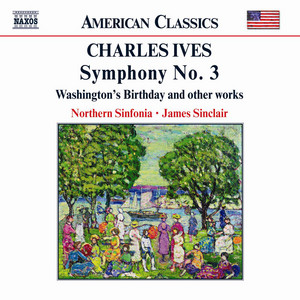 | The Unanswered Question | Charles Ives, Royal Northern Sinfonia, James Sinclair | C Major | 0 | 8B | 63 BPM | |
 | Music for Strings, Percussion & Celesta, Sz. 106: II. Allegro | Béla Bartók, Chicago Symphony Orchestra, Sir Georg Solti | D♭ Major | 2 | 3B | 142 BPM | |
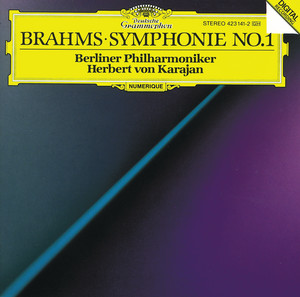 | Symphony No. 1 in C Minor, Op. 68: II. Andante sostenuto | Johannes Brahms, Berliner Philharmoniker, Herbert von Karajan | E Major | 1 | 12B | 85 BPM | |
 | String Quartet No. 2 in D Major: III. Notturno: Andante | Alexander Borodin, Budapest Haydn Quartet | A Major | 1 | 11B | 89 BPM | |
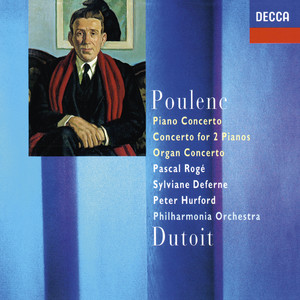 | Concerto for Organ, Strings and Percussion in G minor, FP 93: Allegro giocoso | Francis Poulenc, Peter Hurford, Philharmonia Orchestra, Charles Dutoit | D Major | 1 | 10B | 110 BPM | |
 | Peer Gynt Suite No. 1, Op. 46: II. Åse's Death | Edvard Grieg, Wiener Philharmoniker, Zubin Mehta | G Major | 0 | 9B | 99 BPM | |
 | Danzas fantásticas, Op. 22: I. Exaltación | Joaquín Turina, Juanjo Mena, BBC Philharmonic | E Minor | 0 | 9A | 129 BPM | |
 | The Planets, Op. 32: 3. Mercury, the Winged Messenger | Gustav Holst, Berliner Philharmoniker, Herbert von Karajan | A Major | 1 | 11B | 108 BPM | |
 | The Rake's Progress, Act III Scene 3: Duet. In a foolish dream… (Tom, Anne) | Igor Stravinsky, Jayne West, Jon Garrison, Arthur Woodley, John Cheek, Shirley Love, Wendy White, Melvin Lowery, Jeffrey Johnson, Gregg Smith Singers, Orchestra of St. Luke's, Robert Craft | E♭ Major | 1 | 5B | 89 BPM | |
 | Also sprach Zarathustra, Op. 30: VIII. Das Tanzlied – Das Nachtlied | Richard Strauss, Michel Schwalbé, Berliner Philharmoniker, Herbert von Karajan | C Major | 2 | 8B | 86 BPM | |
 | Symphony No. 3 in C Minor, Op. 78 "Organ": Allegro | Camille Saint-Saëns, Eugene Ormandy, E. Power Biggs, Philadelphia Orchestra | F Major | 3 | 7B | 111 BPM | |
 | Mavra (arr. S. Dushkin): Mavra: Russian Maiden's Song, "Parasha's Aria" (arr. S. Dushkin for violin and piano) | Samuel Dushkin, Igor Stravinsky, Livia Sohn, Benjamin Loeb | G Minor | 0 | 6A | 140 BPM | |
 | Symphony No. 1, Op. 9: III. Andante tranquillo | Samuel Barber, Leonard Slatkin, St. Louis Symphony | B♭ Major | 3 | 6B | 93 BPM | |
 | Concerto for Orchestra, Sz. 116: IV. Intermezzo interrotto (Allegretto) | Béla Bartók, Chicago Symphony Orchestra, Pierre Boulez | D Major | 1 | 10B | 73 BPM | |
 | Pines of Rome, P. 141: I. I pini di Villa Borghese | Ottorino Respighi, Buffalo Philharmonic Orchestra, Joann Falletta | C Minor | 1 | 5A | 90 BPM | |
 | Pictures At An Exhibition: Gnomus | Modest Mussorgsky, Chicago Symphony Orchestra, Carlo Maria Giulini | B Major | 0 | 1B | 99 BPM | |
 | Verklärte Nacht, Op. 4 (Version for String Orchestra): V. Adagio (Bar 370) | Arnold Schoenberg, Berliner Philharmoniker, Herbert von Karajan | D♭ Minor | 0 | 12A | 67 BPM | |
 | Requiem Canticles: Libera me | Igor Stravinsky, Sally Burgess, Roderick Williams, Simon Joly Chorale, Philharmonia Orchestra, Robert Craft | B♭ Major | 3 | 6B | 136 BPM | |
 | Rhapsodie Orientale, Op. 29: 1. Andante | Alexander Glazunov, Orchestre Symphonique de Montréal, Charles Dutoit | D♭ Major | 0 | 3B | 89 BPM | |
 | Peter Grimes, 4 Sea Interludes, Op. 33a: III. Moonlight | Benjamin Britten, London Symphony Orchestra, Steuart Bedford | E♭ Major | 0 | 5B | 78 BPM | |
 | Scheherazade: Calm - the triumph of Scheherazade | Nikolai Rimsky-Korsakov, Lars Hjalmar Joakim | E Minor | 0 | 9A | 68 BPM | |
 | Schoenberg: Verklärte Nacht, Op. 4: I. Grave (1943 Version) | Arnold Schoenberg, Daniel Barenboim, Chicago Symphony Orchestra | D Minor | 1 | 7A | 174 BPM |
- ISRC
- GBELX1304623
- Label
- L-M Records/RCA Records